MotionBench
First find out what actually moves — with no manual tagging, across every model the library ships. Then attach anything to that motion, made of a real, cited material: aluminum foil, spring steel, copper wire, a pine dowel, a rubber band, a slinky.
Find the moving partsAuto-detected motion hooks
Every AnimatedKit gait clip rebuilds its whole scene from the same code path at
every phase, and every ParametricKit model rebuilds from the same code path at
every slider value — so ShapeScene.Parts[i] at one sample and at another sample
is the same logical part, just moved. Sample a handful of points along that axis, track each
part's world-space bounding-box centre, and any part whose position spreads out past a small
threshold is a candidate attachment point — a hook — found automatically, with zero
changes to the recipe that built it.
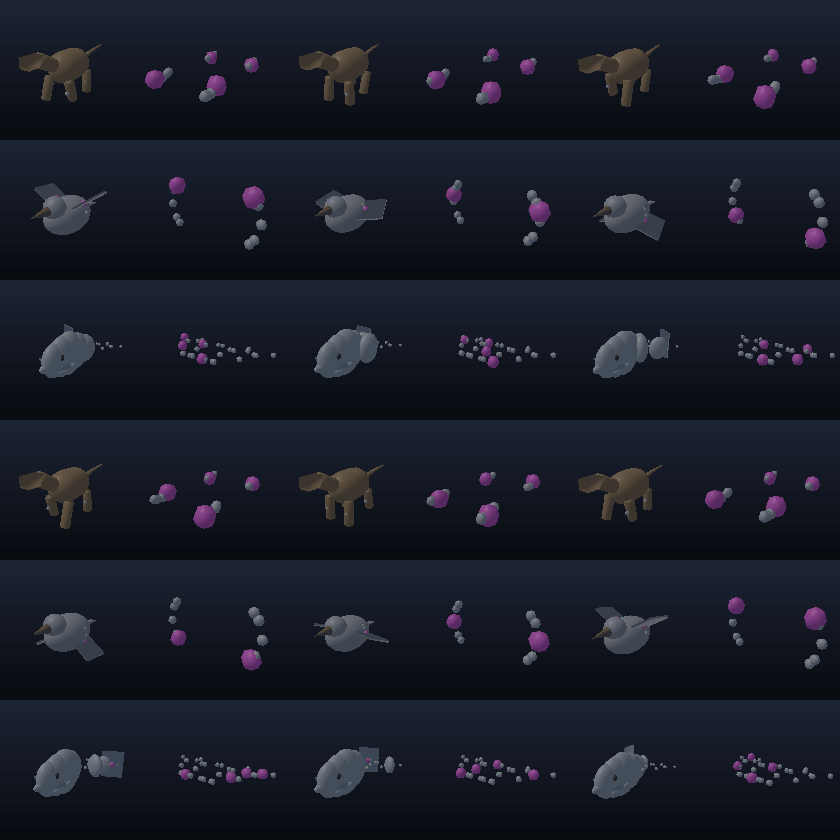
The same detector works whether the axis is a gait phase (a walk cycle) or a full slider sweep (min→max on a bestiary monster's every knob at once) — which is how a technique built for 99 locomotion clips ended up covering all 1,719 sources the library has: every daemon, dragon, fiend, undead, aberration, outsider, fey and elemental in the bestiary that never got a hand-authored animation still has parts that move when its sliders move.

AnimatedKit gait clips + 1,620 sweepable
ParametricKit models, sorted by family. Static frame shown here for weight; the
full animated version plays every source's own sweep
(~11 MB).
Attach something realMaterial physics: stiffness, weight, memory
A detected hook — or any point on any model — can now be a mount for a real, weighted,
bendable attachment instead of a rigid transform. MaterialPreset combines a
cited density and Young's modulus (this repo's own Chemistry.Materials and
building-materials catalogs) with an everyday-object cross-section to get a real flexural
rigidity E·I — the actual reason aluminum foil is floppy despite aluminum being a
structurally stiff metal: same E as a solid rod, but I ∝ thickness³ collapses at foil gauge.
FlexibleAttachment then clamps a chain of real
PhysicsAndAstronomy.Physics.SoftBody (XPBD) particles to a live parent position
every step, each one pulled toward its "straight rod" position by a spring sized from that
E·I, weighted by real mass, and — the "memory" dial — creeping its own rest target toward
wherever gravity or a knock left it, at a rate set by the material's plasticity.
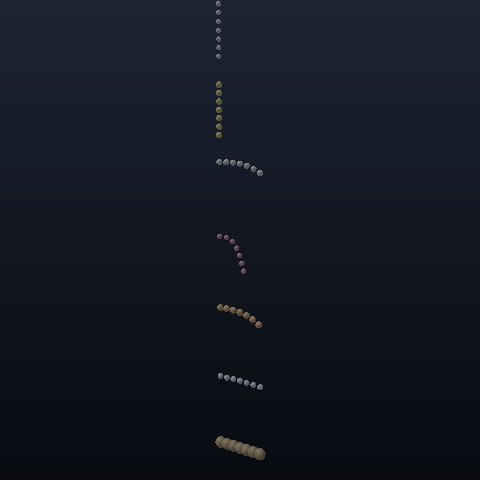
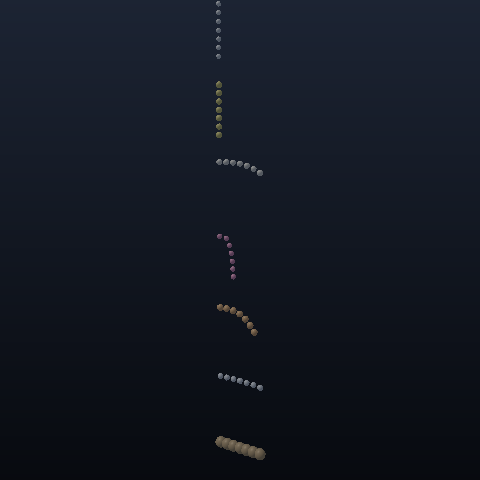

| Material | Source | Gauge | E·I (N·m²) | Plasticity |
|---|---|---|---|---|
| Pine Dowel | BuildingMaterialsCatalog['Pine timber'] | 5 mm rod | 2.8×10⁻¹ | 0.05 |
| Spring Steel Wire | MaterialCatalog.SteelA36 | 1 mm rod | 9.8×10⁻³ | 0.02 |
| Copper Wire | MaterialCatalog.CopperC11000 | 1.6 mm rod | 3.8×10⁻² | 0.55 |
| Pipe Cleaner | MaterialCatalog.SteelA36 (bare core) | 0.5 mm rod | 6.1×10⁻⁴ | 0.65 |
| Cotton String | uncited (flagged in source) | 0.8 mm rod | 1.2×10⁻⁴ | 0.00 |
| Rubber Band | uncited (flagged in source) | 1 mm strip | 4.9×10⁻¹⁰ | 0.00 |
| Aluminum Foil | MaterialCatalog.Aluminum6061T6 | 16 μm strip | 7.3×10⁻¹³ | 0.90 |
Springs, coils, slinkies — and anything elseReal helical-spring mechanics
Shapes.Coil sweeps a wire along a sampled helix — a tight spring, a wide slinky,
a long coil, or a chunky bedspring, all from the same four sliders. SpringPreset
derives a shear modulus G = E/(2(1+ν)) from a cited material's Young's modulus and
Poisson's ratio (no repo catalog has shear modulus directly — this is the standard isotropic-
elasticity relation, not an invented number), then the classic helical-spring formula
k = G·d⁴/(8·D³·N) for the actual spring constant. A mass hung on one of these springs
settles at the textbook Hooke's-law equilibrium — proven, not assumed.
Mounting an existing catalog model on a material needed no new code at all —
FlexibleAttachment's tip position was already public, so any of the 1,719 sources
swept above can hang, sway, or spring from a chosen material the same way a synthetic rod does.
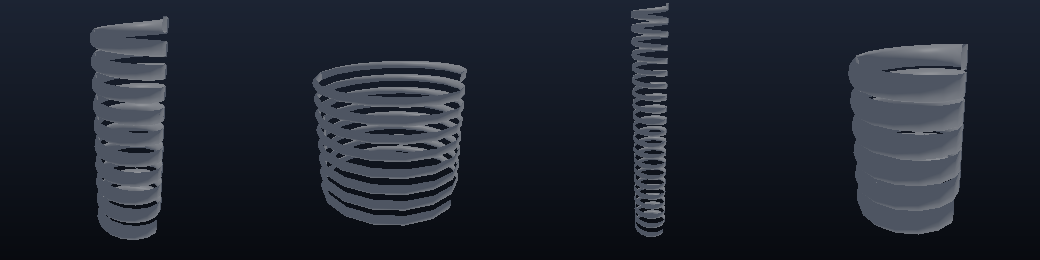
Shapes.Coil(coilRadius, wireRadius, height, turns).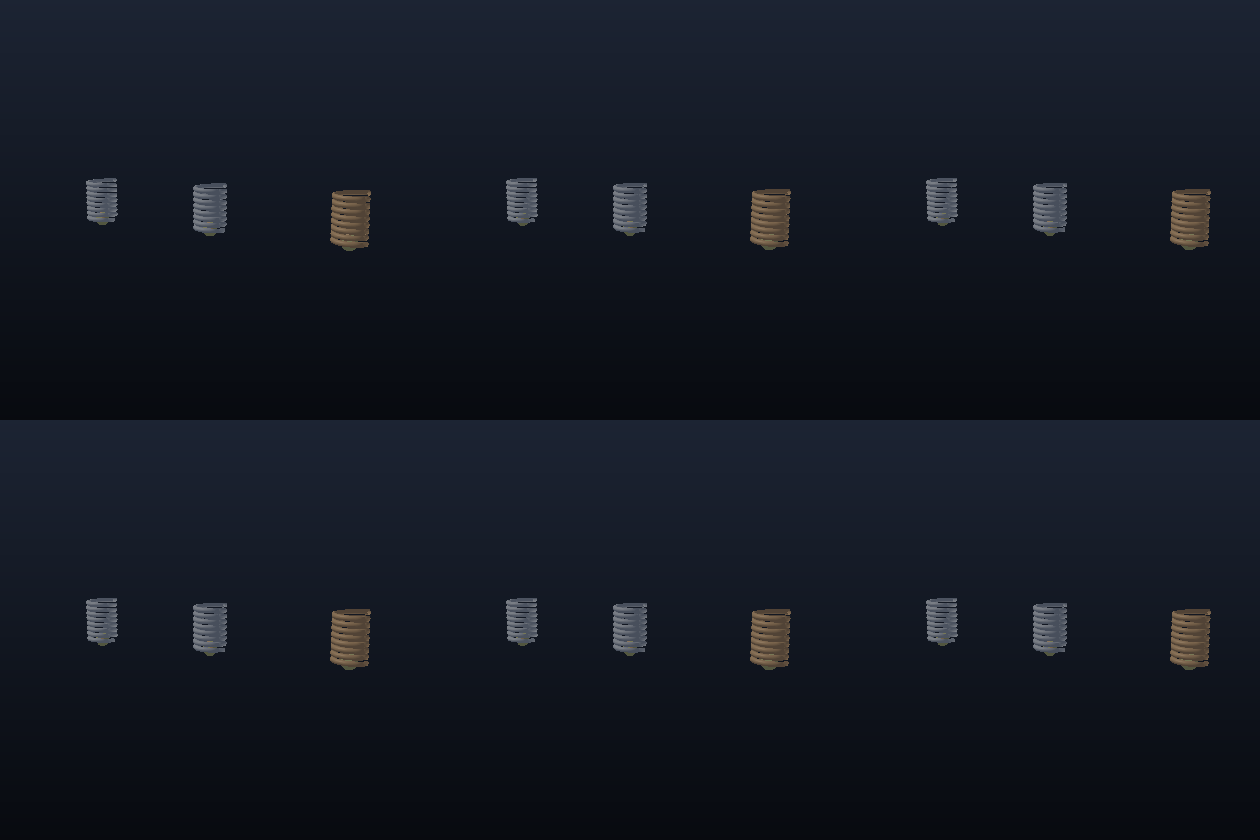
SpringPreset materials, one hanging mass each — the coil mesh
itself re-generates every frame at the live simulated length, so it visibly stretches and
compresses in sync with the physics.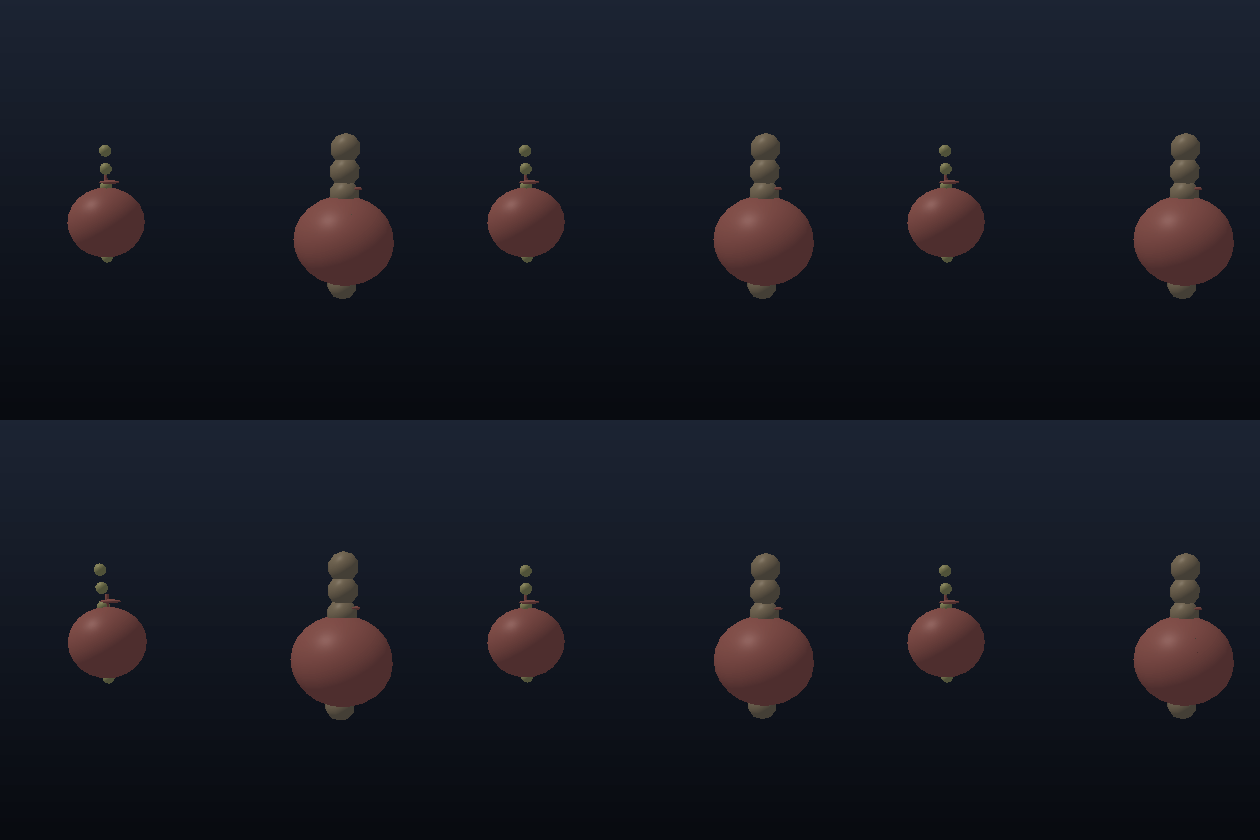
ObjectKit.Build("Apple") hanging from a rubber-band mount
(left, sags to near-vertical under its own weight) versus a pine-dowel mount (right, stays
extended) — the generalization proof: any model, any material.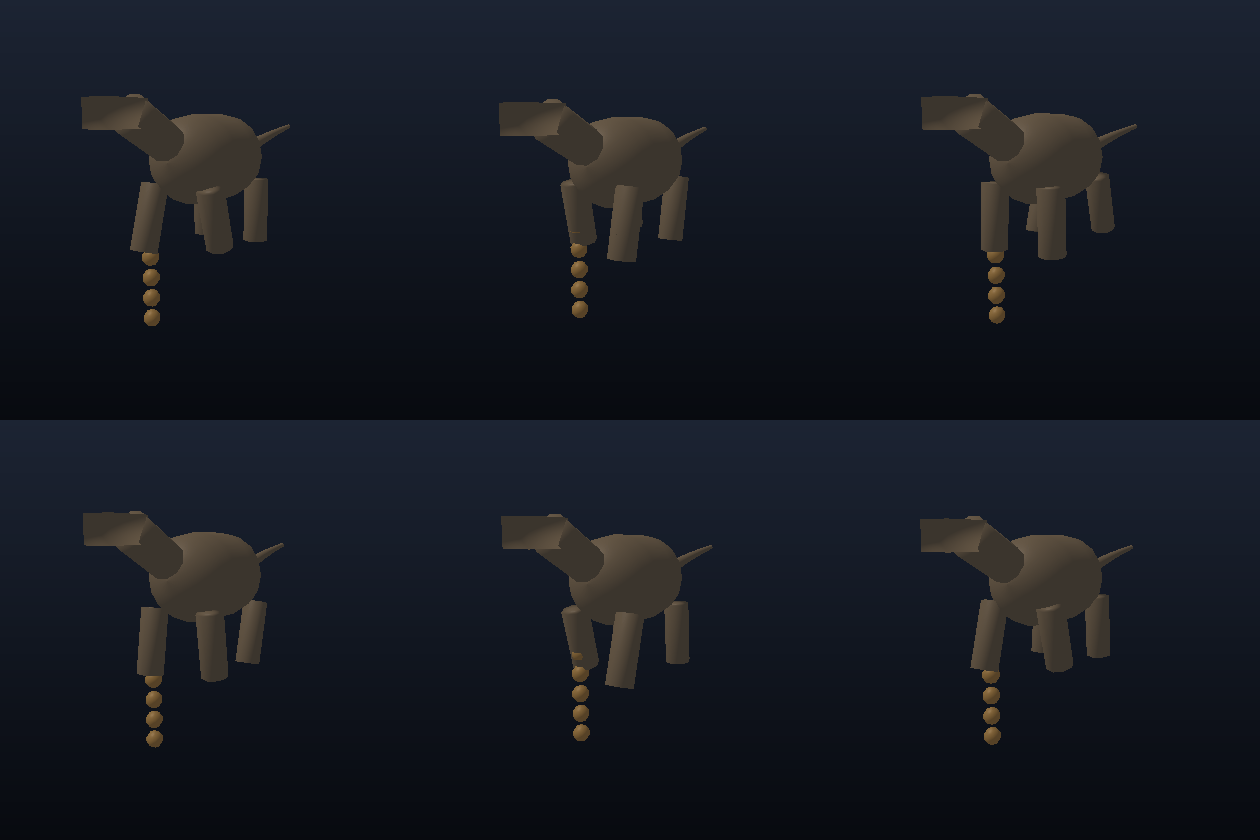
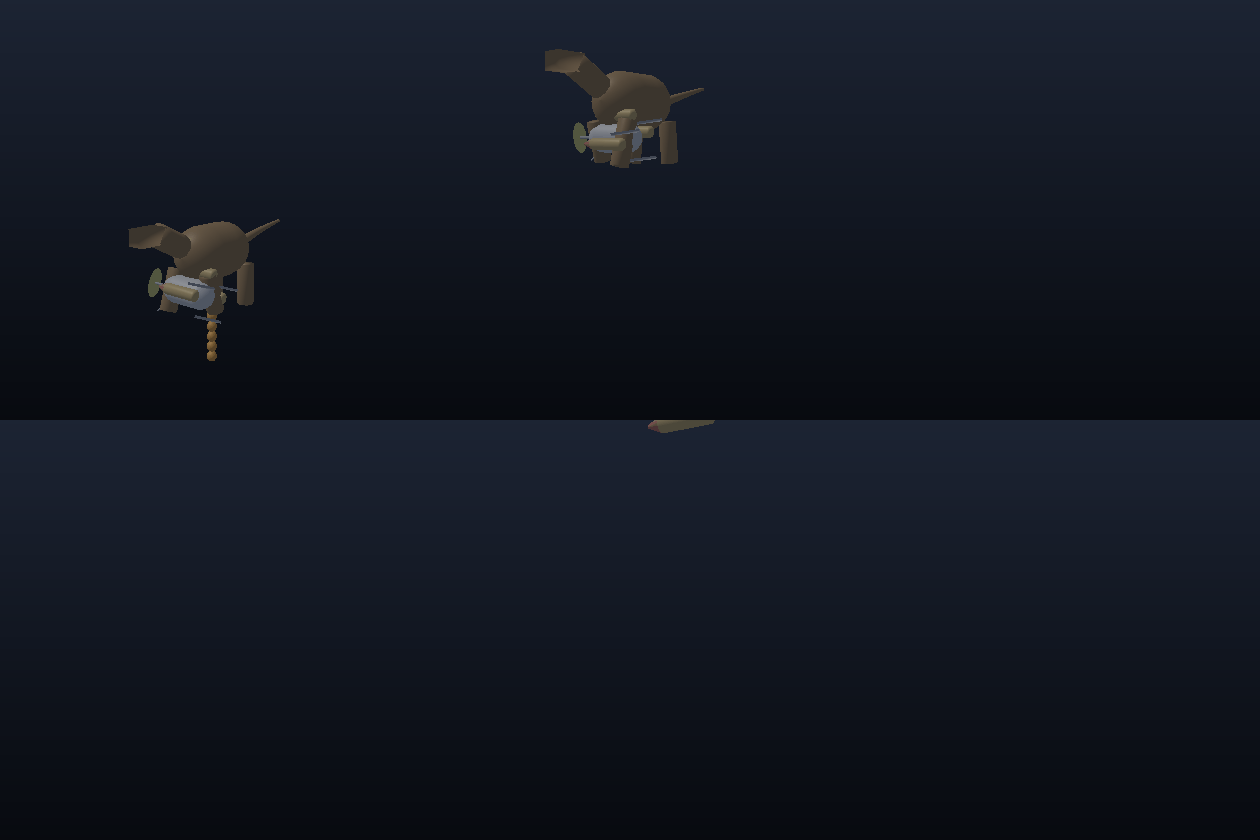
leg.FL hook drives two FlexibleAttachment chains (copper wire vs.
cotton string) through their base every physics step — the attached material whips around with
the gait purely from simulation, no hand-authored animation. The exact "attach pieces onto each
moving segment" ask, with materials.| Spring | Material | Wire | Coil Ø | Coils | k (N/m) |
|---|---|---|---|---|---|
| Soft Steel Coil | SteelA36 | 1.5 mm | 30 mm | 40 | ~465 |
| Stiff Steel Spring | SteelA36 | 4 mm | 20 mm | 10 | ~31,747 |
| Copper Spring | CopperC11000 | 4 mm | 20 mm | 10 | ~17,462 |
Build it, stage it, ride itThe Craft framework: KSP-style editing, actions, save/load
Everything above composes into an editable system: a Craft is a KSP-style part
tree — pick a core, slap on an evenly-spaced ring or freehand slots, link parts onto parts to
any depth, re-parent, remove subtrees — with every edit validated the moment it's made
(duplicate ids, dangling parents, and re-parent cycles all throw). Parts carry
time-driven actions: spin, oscillate, pulse, and Detach — real staging,
where a booster and its whole subtree freeze their pose at the staging instant and fall
ballistically (y = h − gt²/2, verified against hand-derived numbers in the KATs). A craft
saves to a ~2 KB plain-text .craft file you can read, diff, and hand-edit —
and loading goes through the same validated editing API, so a corrupt file fails loud at load,
never as a silently-wrong render.

AddRing) → nose
cones linked onto the boosters → dish/antenna/legs freehand → the edit pass (one
booster removed recursively, dish recolored, antenna re-slotted) → actions armed.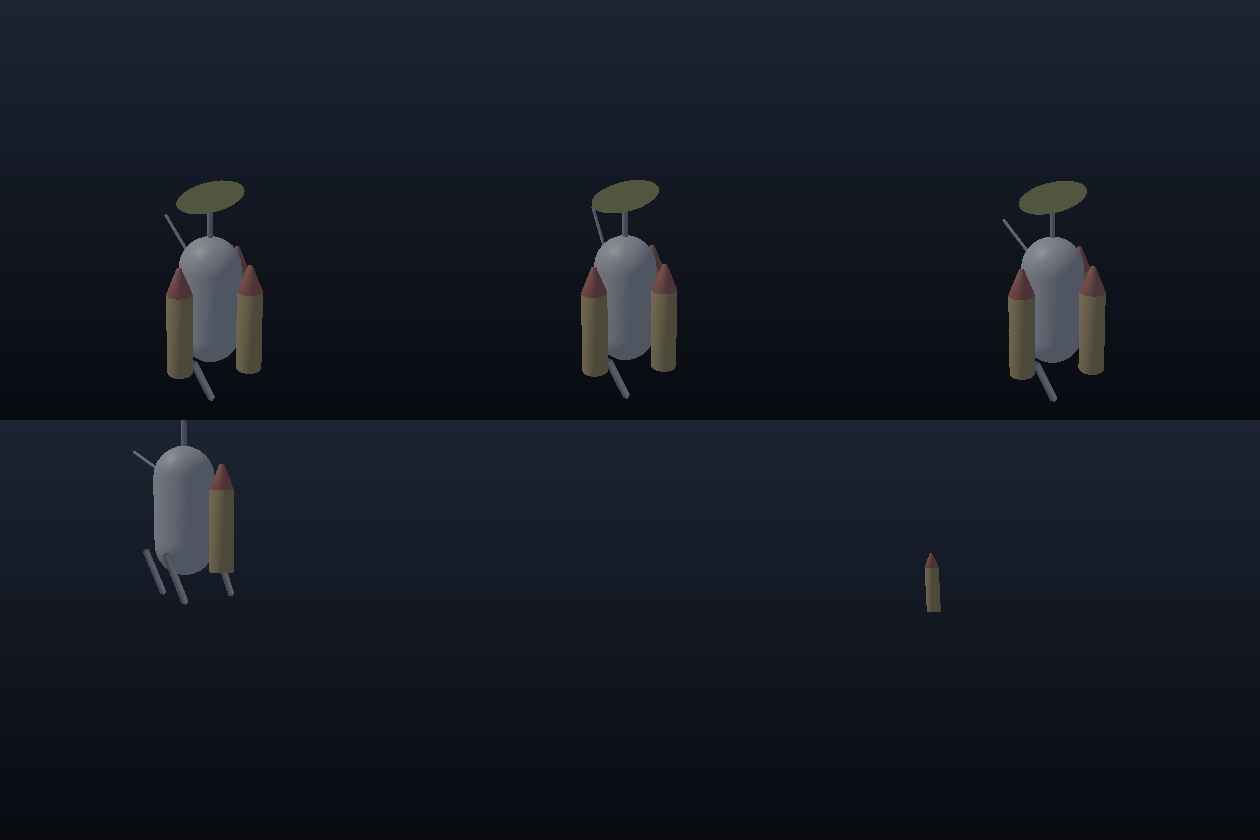
.craft file anchored to the
walking horse's tagged leg hook — the entire part tree rides the gait with its actions still
running, plus a copper-wire physics streamer mounted on the craft's own mast tip.
Animated hook → craft tree → actions → material physics.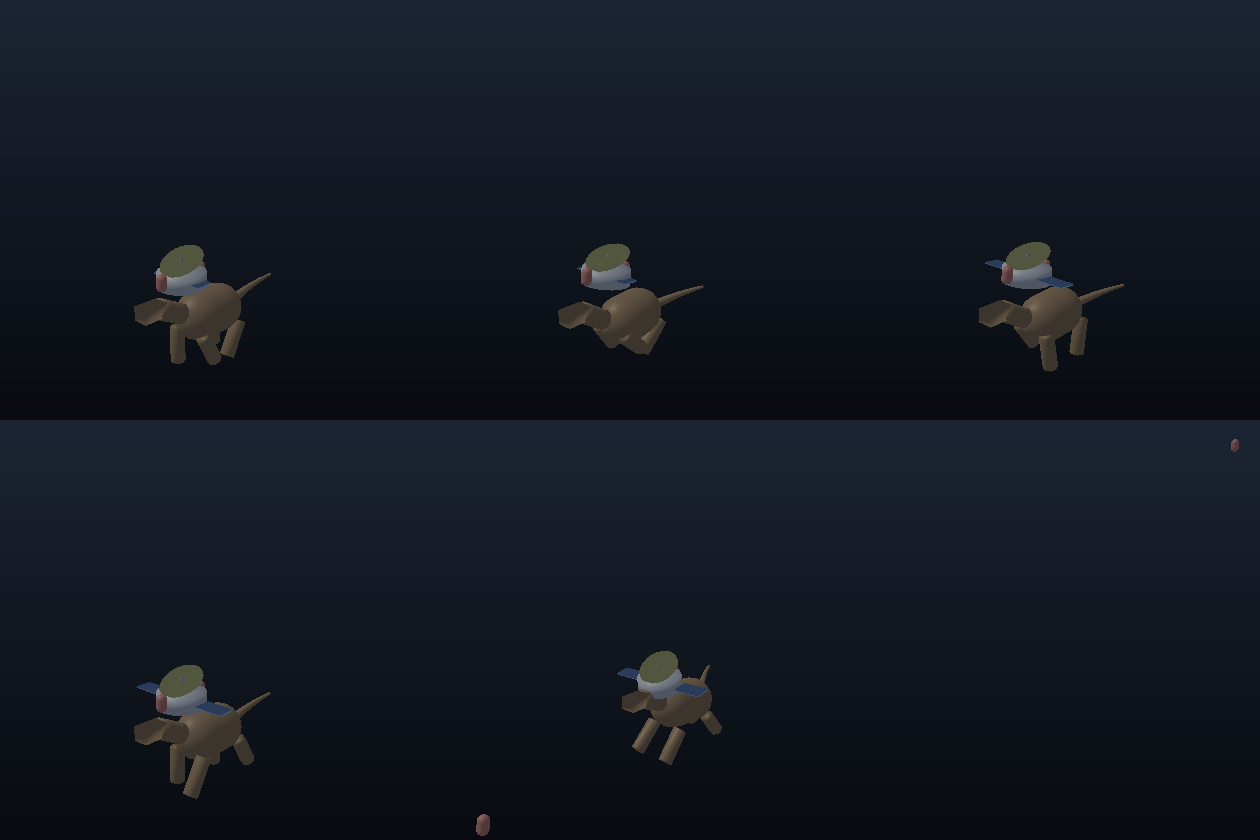
Extend outward on a smoothstep deploy while the
radar spins, then two pods sepratron-kick off sideways with real initial velocities — full
projectile motion, hand-verified in the KATs.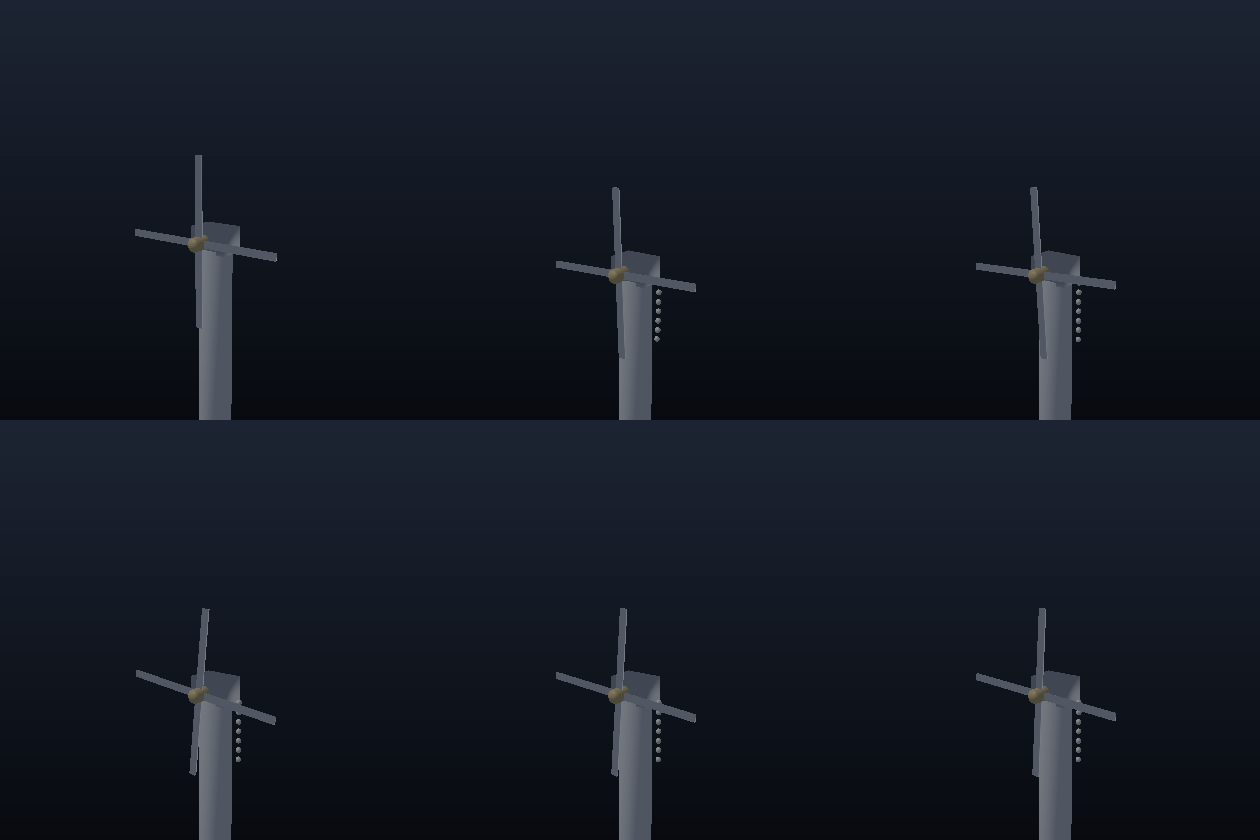
flex:cottonstring,6,0.5 node — material
physics living inside the same .craft file, run by CraftRuntime.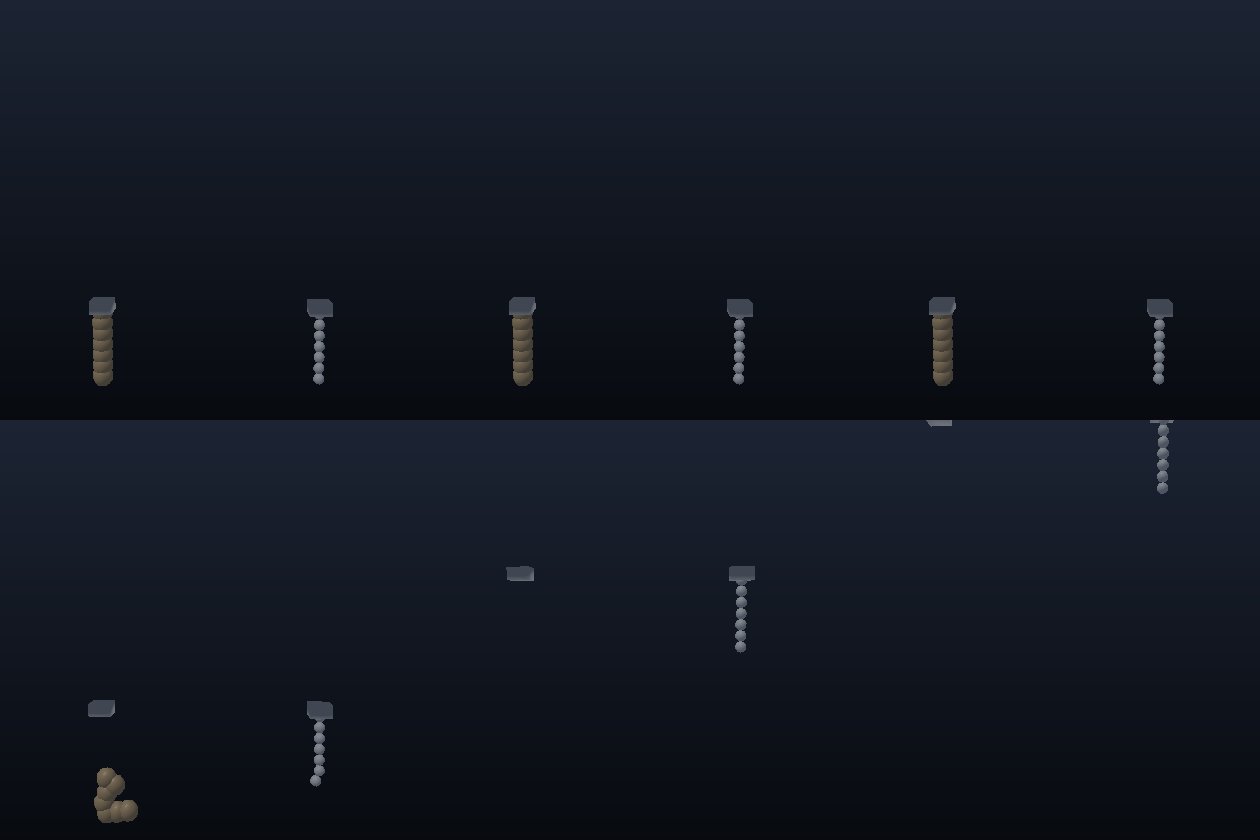
MaterialFracture accumulator latches and the chain
lets go) and 90 MPa through the spring-steel one (under the endurance fraction of
its cited 250 MPa yield — no fatigue dose at all, it springs back). Same jolt, different
materials, different fates.