Graphics demo - Galileo falling-body sim
Each body falls differently - because its physics does
A physics-first falling-body simulator. Six objects are released together into a vertical atrium of different media, and each falls differently because its physics differs, not because of a per-object animation. The simulation decides the fall; the SDF renderer only shows it. Every rendered position and orientation is read back from a recorded trajectory sample - SI units throughout.
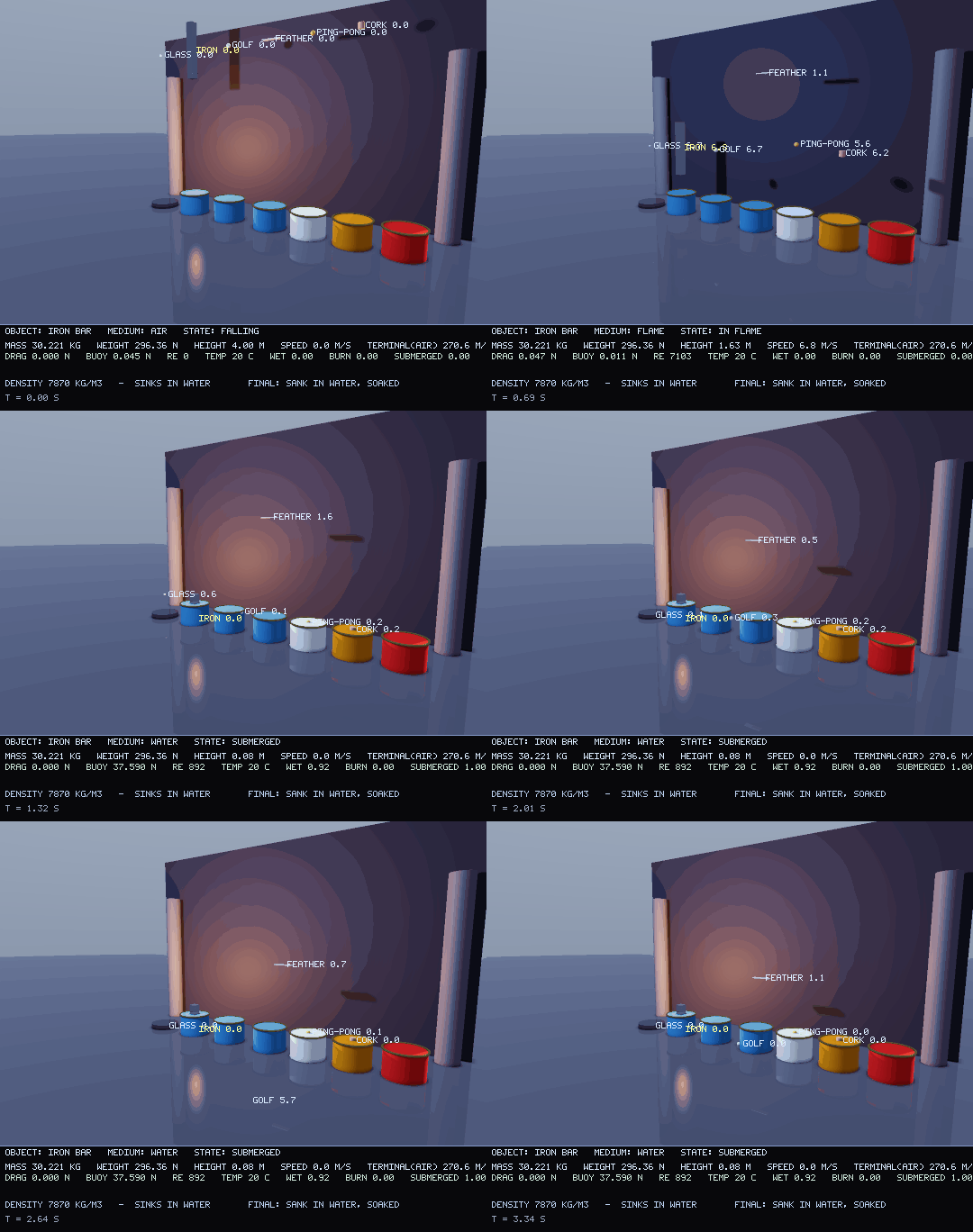
Beauty view
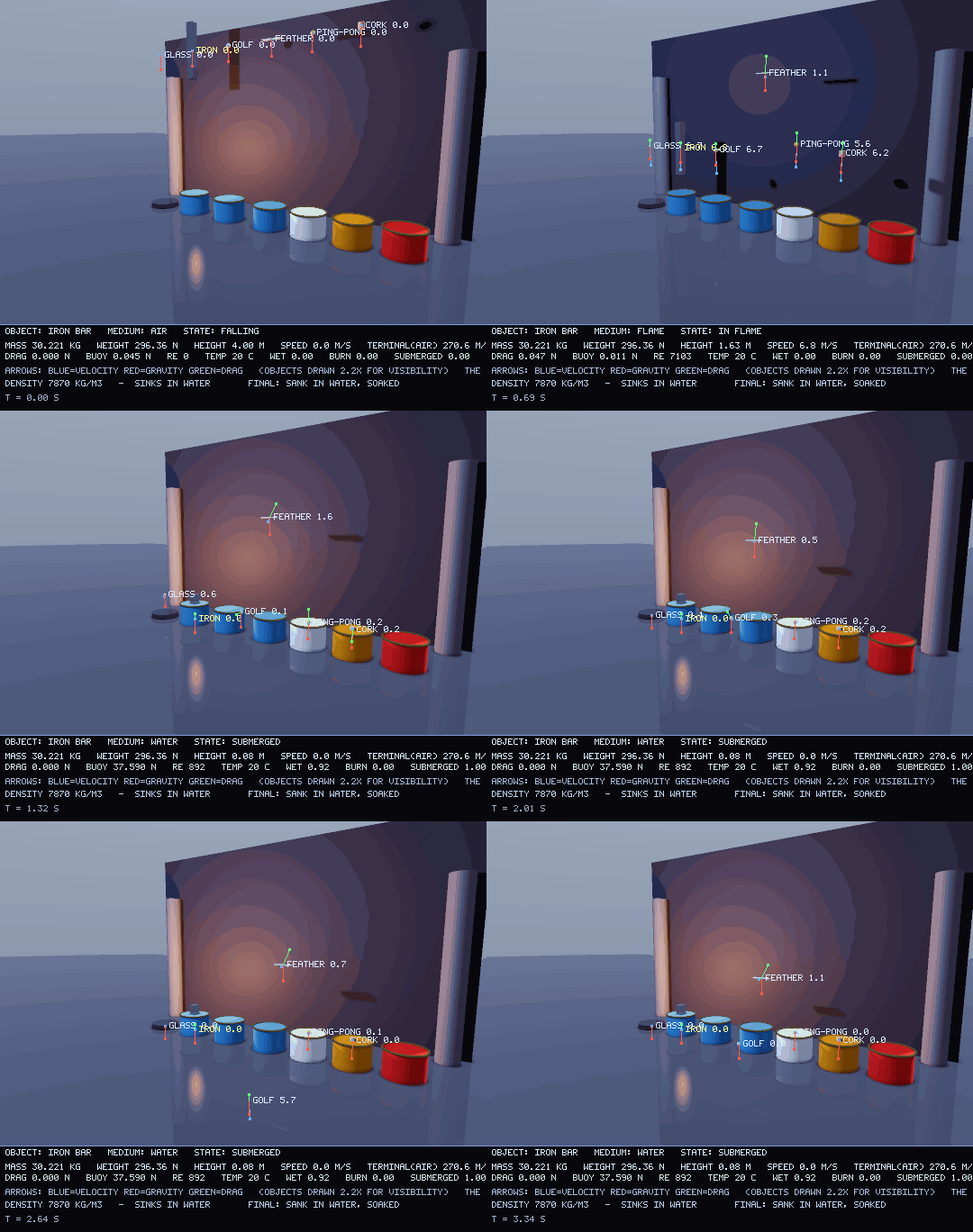
Debug view
velocity
gravity
drag
stained-glass basin
What the physics proves
| Effect | What the sim demonstrates |
|---|---|
| Buoyancy | Density alone decides float vs. sink: iron, glass and golf ball sink; cork, wood and the hollow ping-pong ball float - from Archimedes' law, not a flag. |
| Terminal velocity | In air, feather < golf < iron; and the medium changes everything - a golf ball's terminal speed is air > water > honey (barely creeping in honey). |
| Heavier falls faster (in air) | Because of drag, the iron bar reaches the floor before the feather - the opposite would be true only in vacuum. |
| Reynolds regime | The Reynolds number selects Stokes
vs. quadratic drag automatically; drag removes energy, so measured impact KE is
0 < KE < m * g * h. |
| Orientation and Magnus | An edge-on coin's terminal speed is ~3.5x the same coin face-on; a spinning golf ball curves sideways from Magnus lift. |
| Heat | Hot metal quenches in water and flashes steam (Stefan-Boltzmann + convection); paper ignites in flame, but wet paper does not. |
How it renders
SDF ray march
Recorded fall
54 frames
~65-73 s