Rendered gallery - 25 single-concept plates
Twenty-five plates from one ray tracer
Each plate isolates exactly one idea - a primitive, a light, a material, an optical law - and nothing is faked. Shininess is a real reflected environment, shadows are real visibility rays, and glass really refracts. The renderer is a from-scratch recursive path of rays with a bounding-volume hierarchy, written in plain C# against the .NET base class library. No game engine, no graphics library, no image files on this page except the frames it produced.
25example plates
52 / 52self-test assertions pass
10 sto render the whole suite
512 x 340per frame, 2x anti-aliased
0external dependencies
Primitives5 plates - the ray-intersection kernels
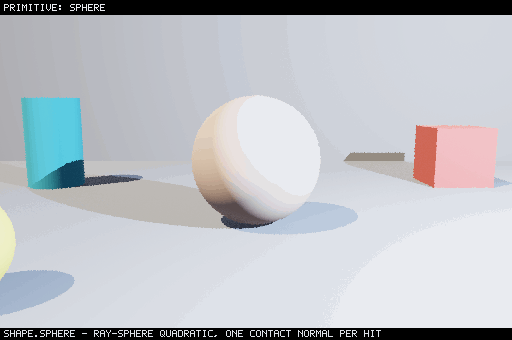
Primitives
Sphere
The ray-sphere quadratic. One smooth curved surface, so the contact normal turns continuously and the shading gradient is smooth from pole to rim.
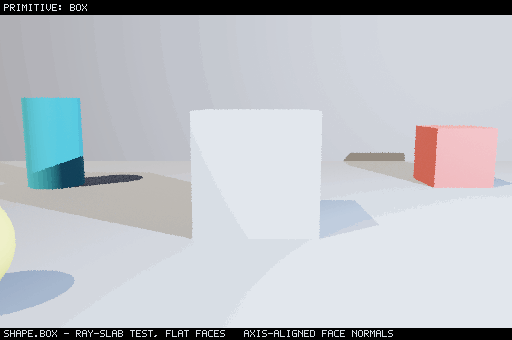
Primitives
Box
The ray-slab test. Flat faces meet at hard edges, and every face carries one axis-aligned normal, so the shading steps rather than sweeps.
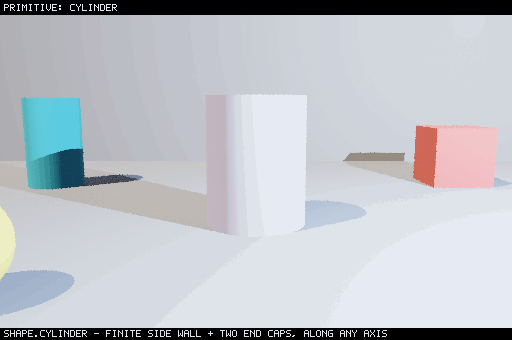
Primitives
Cylinder
A finite side wall plus two end caps, oriented along any axis. The curved wall shades smoothly while the caps read as flat disks.
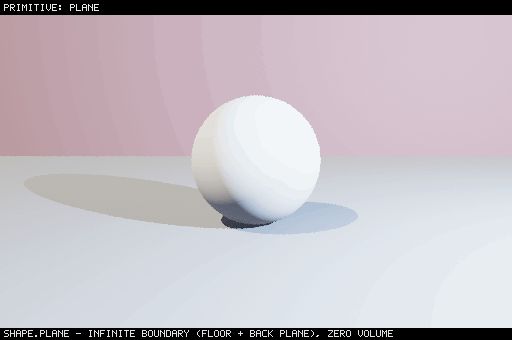
Primitives
Plane
An infinite boundary with zero volume, here a floor plus a colored back plane. It costs one dot product to intersect and catches every cast shadow.
Primitives
The whole set, orbiting
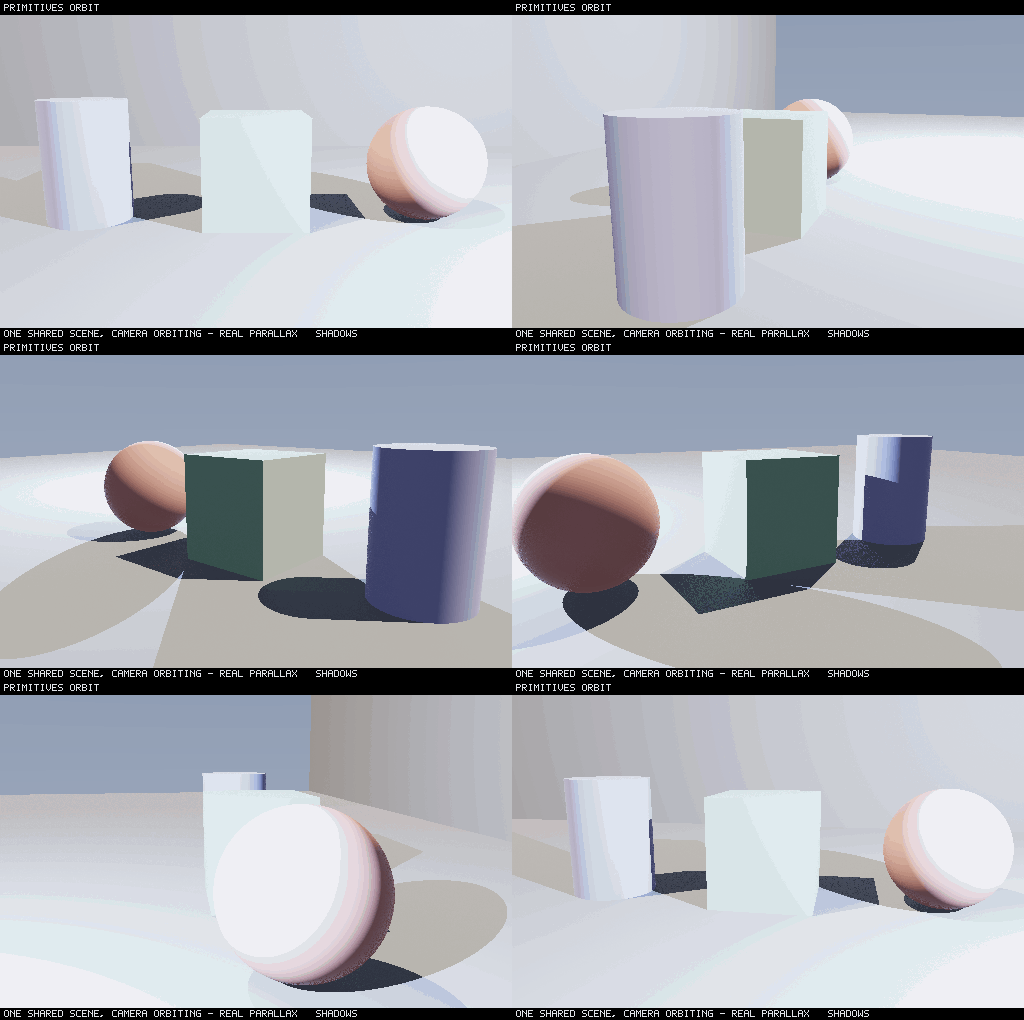
Sphere, box, and cylinder on a plane floor. The camera orbits one shared scene, so the parallax and the cast shadows are computed, never painted.
Lighting10 plates - one reference subject, many rigs
Lighting
Directional sun
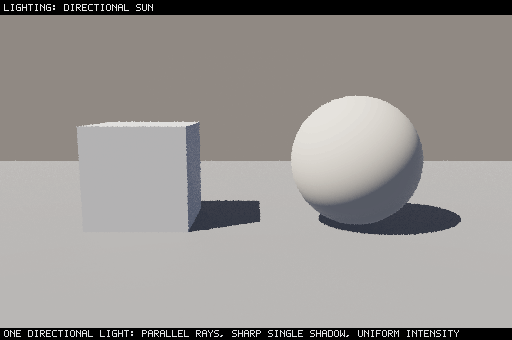
One directional light: parallel rays, uniform intensity everywhere, and a single sharp-edged shadow the whole scene shares.
Lighting
Point + attenuation
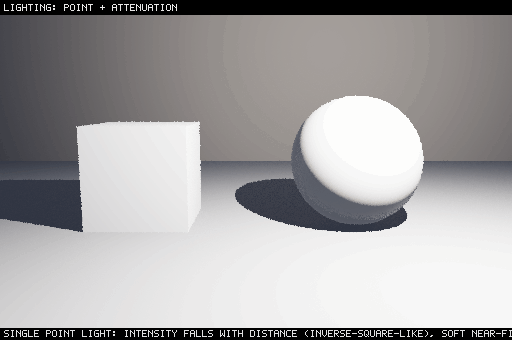
A single point light whose intensity falls with distance, roughly inverse-square. The near face blooms bright while the far side sinks into ambient.
Lighting
Hard shadows
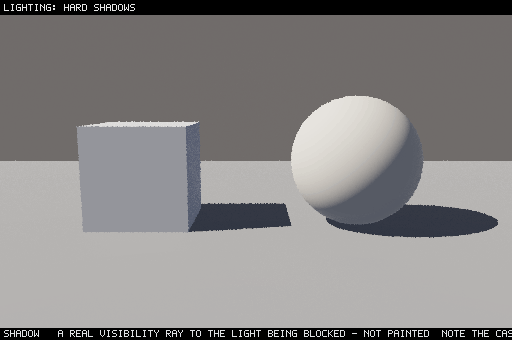
A shadow is a real visibility ray to the light being blocked, never painted. Read the cast shapes: the sphere and box print their true silhouettes.
Lighting
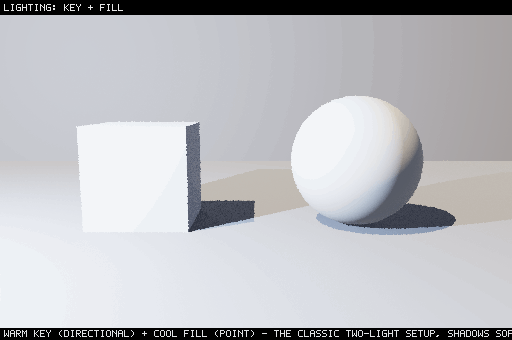
Key + fill
The classic two-light setup: a warm directional key plus a cool point fill. The fill lifts the shadow side without erasing the shadow.
Lighting
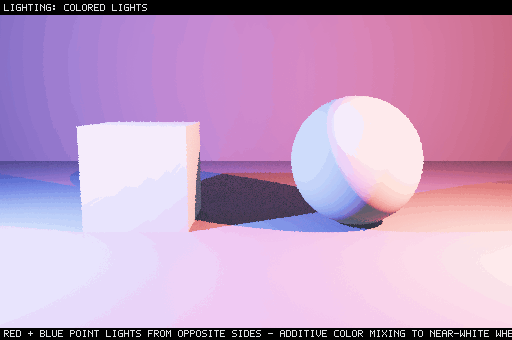
Colored lights
Red and blue point lights from opposite sides. Additive mixing climbs toward white wherever both lights reach the same surface.
Lighting
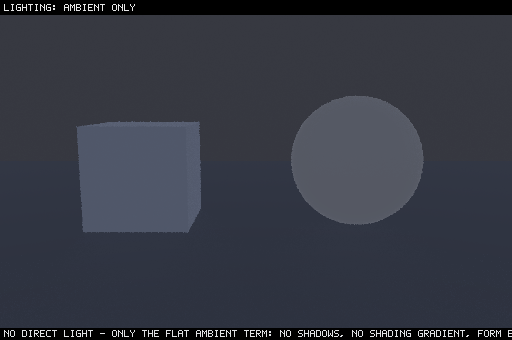
Ambient only
No direct light at all, just the flat ambient term. With no shadows and no shading gradient, the form barely reads: the control case for every rig above.
Lighting
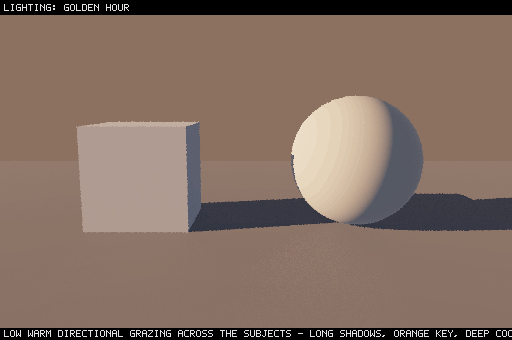
Golden hour
A low, warm directional light grazes the subjects: long shadows, an orange key, and a deep cool ambient fill in the shade.
Lighting
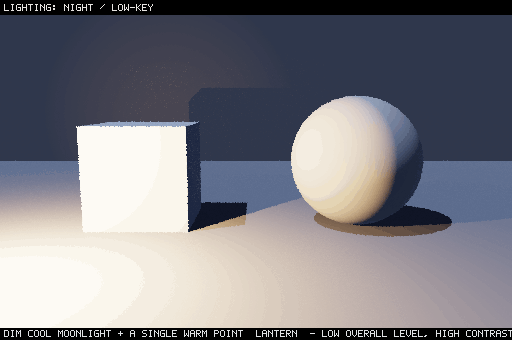
Night / low-key
Dim cool moonlight plus a single warm point lantern. A low overall level with high local contrast, so most of the frame stays in shadow.
Lighting
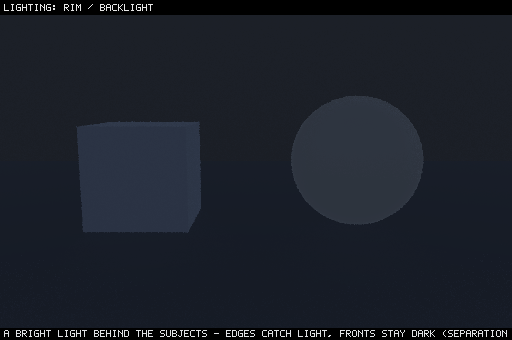
Rim / backlight
A bright light behind the subjects. The edges catch light while the fronts stay dark, separating each form cleanly from the background.
Lighting
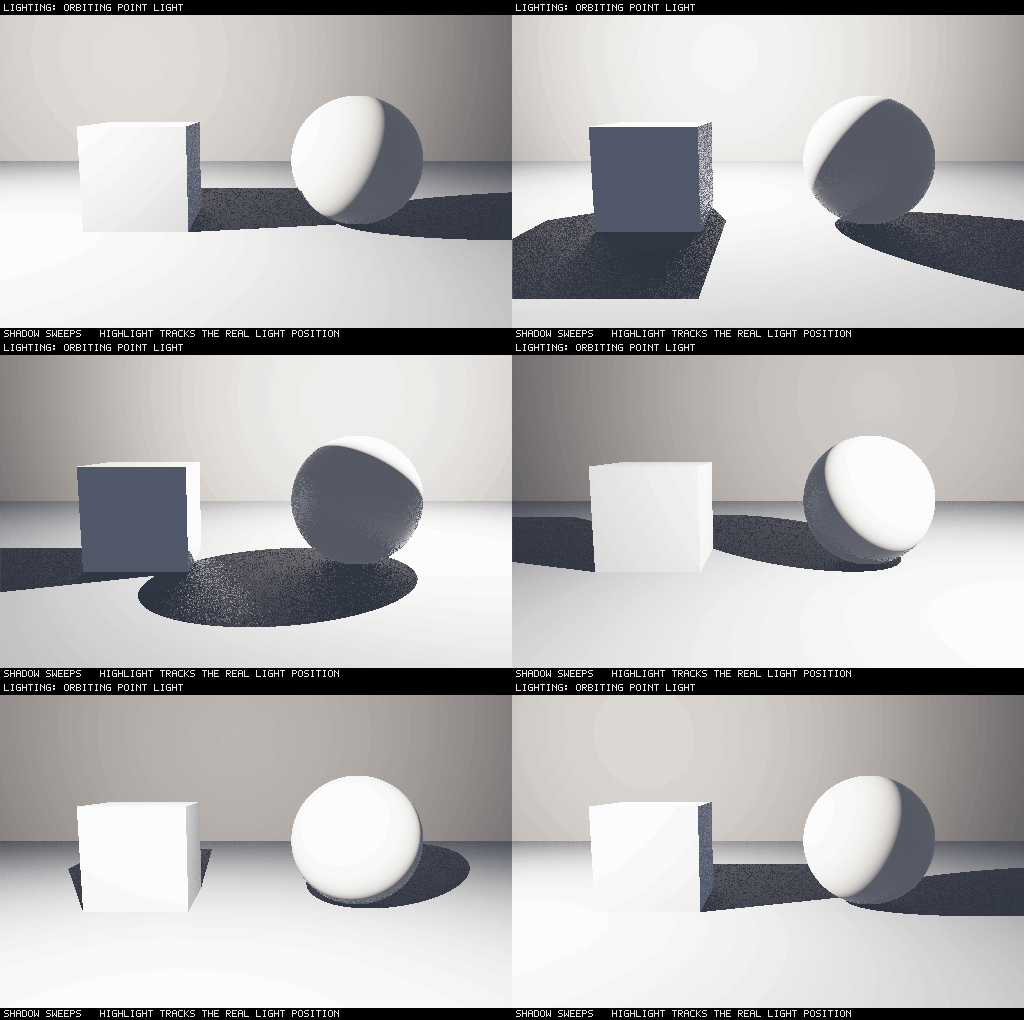
Moving light
One point light circles the subjects. The shadow sweeps the floor and the specular highlight tracks the true light position from frame to frame.
Materials4 plates - shared Material table
Materials
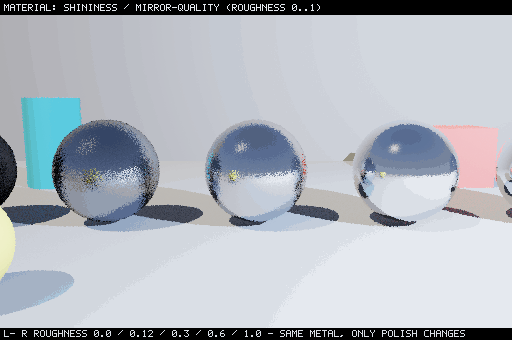
Shininess gradient
One chrome material, roughness stepped left to right. Only the polish changes: mirror, polished, brushed, satin, matte.
Materials
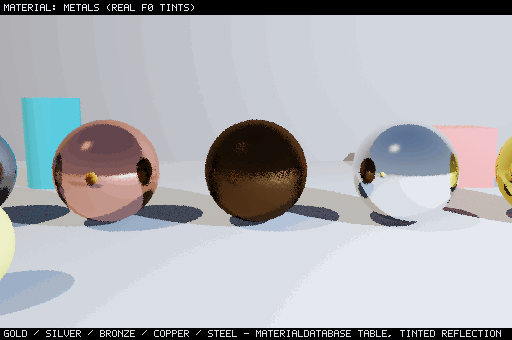
Five real metals
Gold, silver, bronze, copper, and steel from the shared material table. Each reflection is tinted by the metal's own F0 response, computed per bounce.
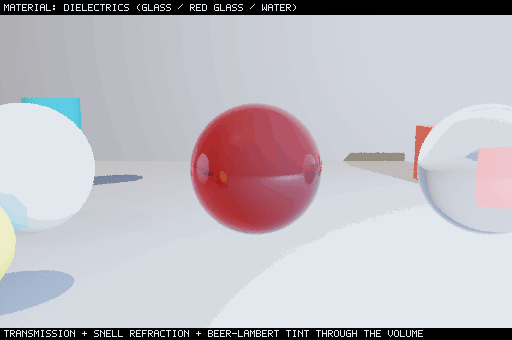
Materials
Glass and water
Clear glass, red-stained glass, and water. Transmission, Snell refraction, and Beer-Lambert tint all happen as the ray travels through the volume.
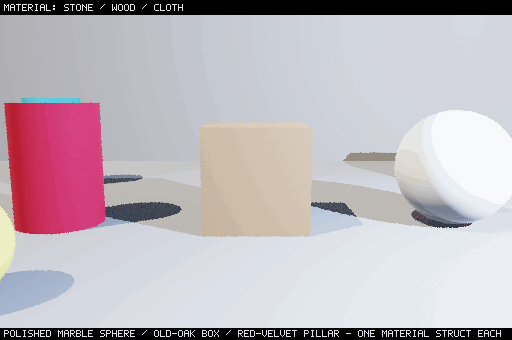
Materials
Stone, wood, cloth
Polished marble, old oak, and red velvet. Three dielectric surfaces with very different roughness and albedo, from the same material table.
Optics5 plates - the physical laws, unfaked
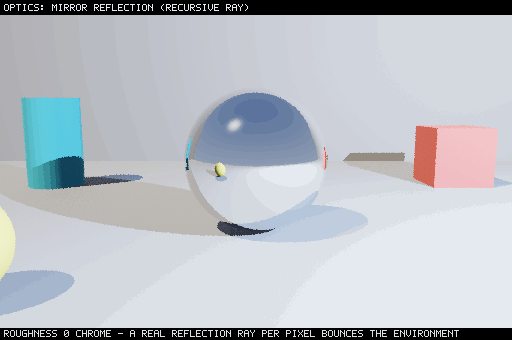
Optics
Mirror reflection
A roughness-zero chrome sphere. One real reflection ray per pixel bounces the room and the sky, bent around the curved surface.
Optics
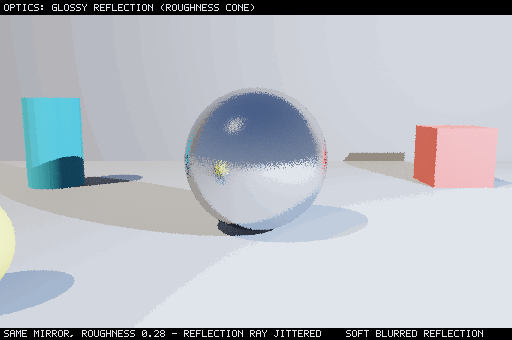
Glossy reflection
The same mirror at roughness 0.28. Each reflection ray is jittered inside a cone, so the sharp mirror softens into a blurred one.
Optics
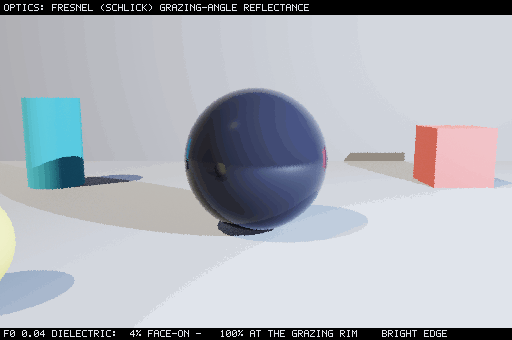
Fresnel edges
A dark dielectric sphere. Schlick reflectance rises from about four percent looking straight on to nearly full at the grazing rim.
Optics
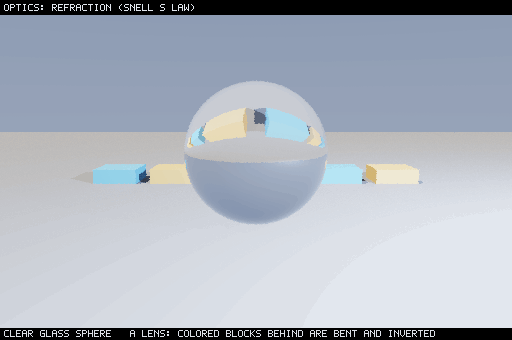
Refraction, Snell's law
A clear glass sphere behaves as a lens. The row of colored blocks behind it is bent and flipped as the rays cross the surface.
Optics
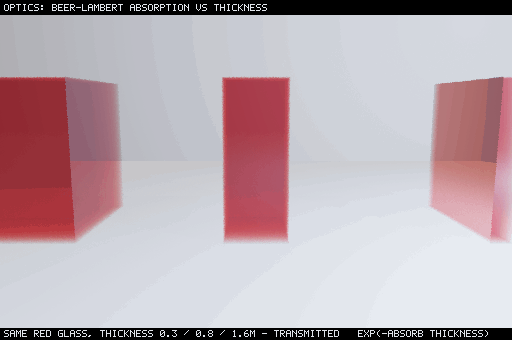
Beer-Lambert law
The same red glass at three thicknesses. Transmitted light equals exp(-absorb x thickness), so the thickest slab reads deepest.
Mirror-quality x lighting1 plate - the founding brief
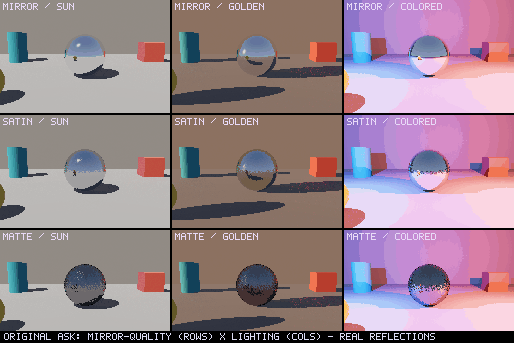
Mirror-quality
Polish times lighting
The founding brief as a grid: polish steps down the rows, lighting changes across the columns. Both dials move the result, so both matter.