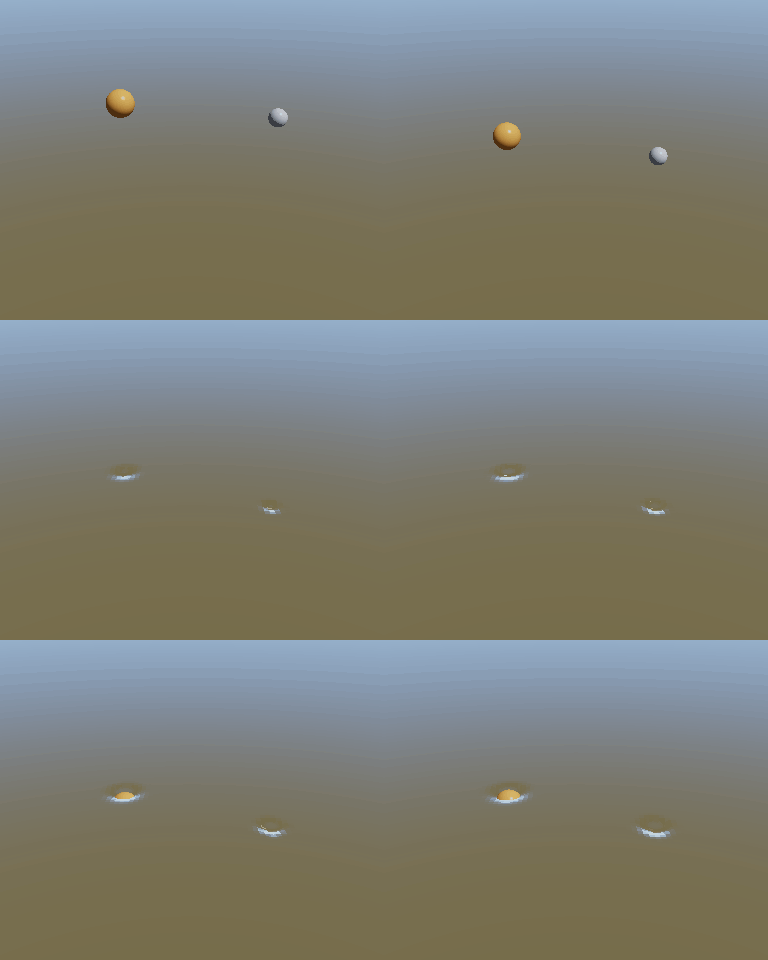
Fresnel water, buoyant spheres
Schlick-Fresnel reflectance (IOR 1.33) blended against a Beer-Lambert depth-absorbed pond bed, with sun glint on the ripple crests. Linear-light throughout, ACES tone-mapped at the byte write.
Reality Engine / Fluids
A 5.76 m x 5.76 m pond solved as a shallow-water heightfield on a 96 x 96 grid. A wooden sphere (600 kg/m³) floats; a steel one (7850 kg/m³) sinks. Each splash injects a ripple that spreads through the damped 2D wave equation and decays. Everything below is rendered from that one solver - pure C#, SI units, no game engine.
Rendered evidence
Two beauty passes and two diagnostic fields, all rendered offline to looping GIF.
Schlick-Fresnel reflectance (IOR 1.33) blended against a Beer-Lambert depth-absorbed pond bed, with sun glint on the ripple crests. Linear-light throughout, ACES tone-mapped at the byte write.

Clockwise from top-left: surface height map, velocity-field magnitude, turbidity and depth colour, then buoyancy (green) and drag (orange) force vectors drawn on each body in real newtons.
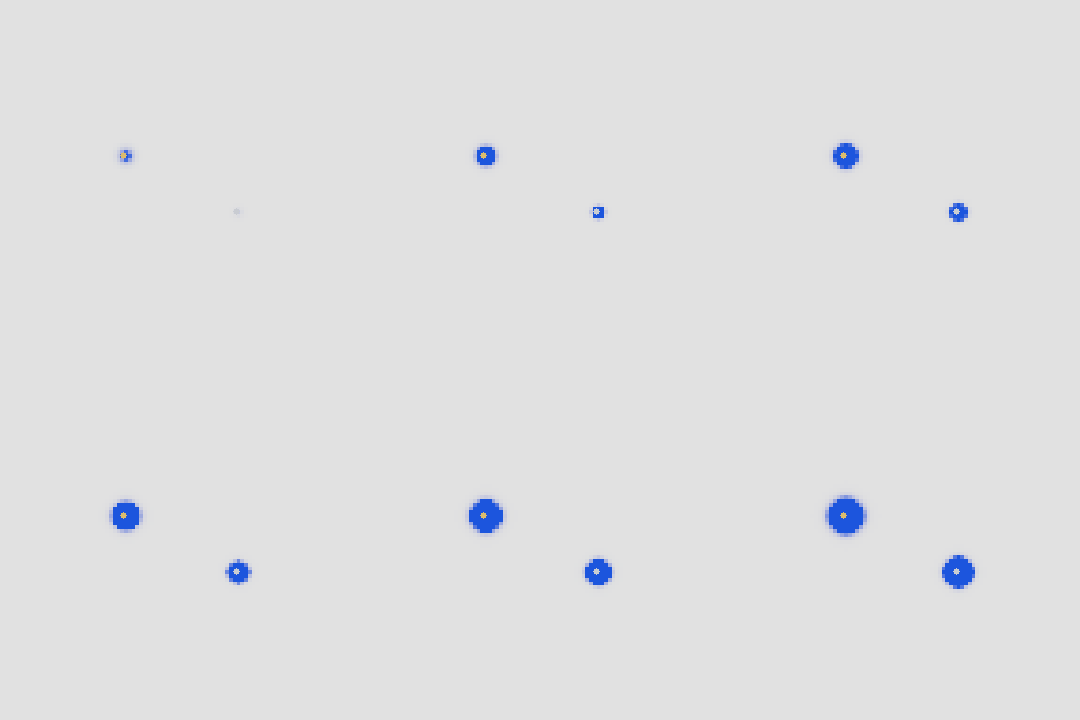
Top-down height ramp - blue troughs, red crests - as the damped 2D wave equation carries each splash outward and the two ripple trains meet and interfere across the pond.
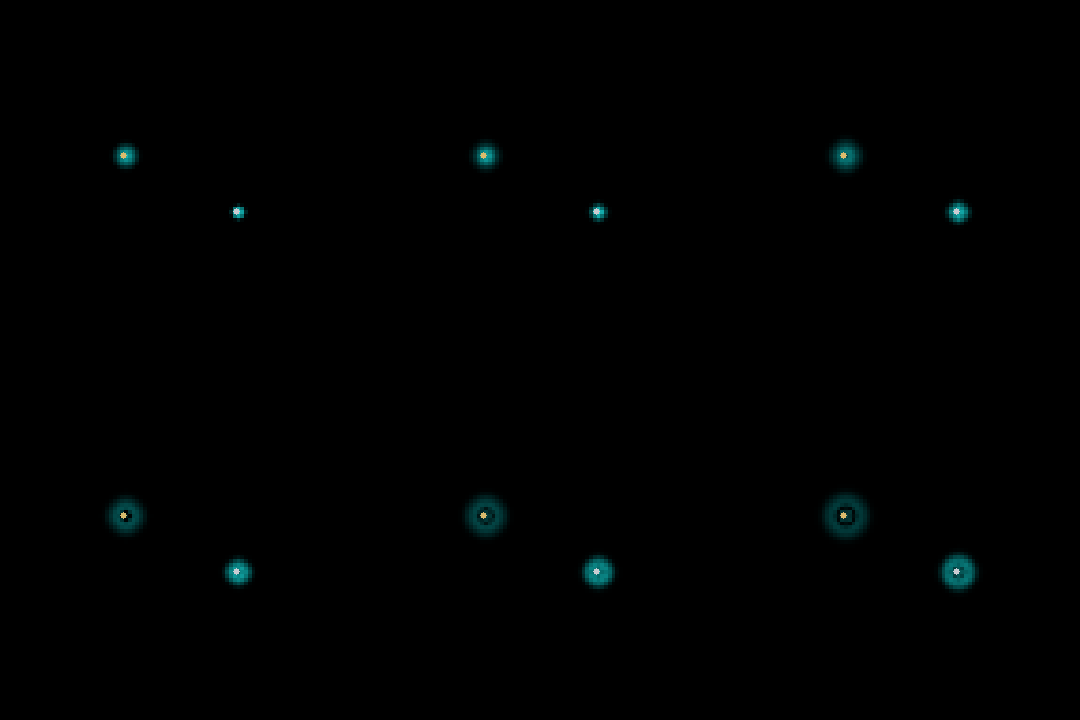
The same step read as surface flux: cyan marks where water is moving fastest. Energy peaks at each impact, then fans out along the wavefronts and bleeds off through per-step damping.
How it works
The pond is a heightfield stepped by the shallow-water wave equation with a CFL-safe sub-step (4 per frame) and a 0.995 per-step damping standing in for viscous loss. Each sphere carries its own buoyancy and quadratic-drag integration; when it breaks the surface it stamps a ripple back into the field, so the water and the bodies are coupled both ways.
The physics and shading are hand-rolled in double precision and narrowed to bytes only at the final GIF encode. It leans on OnlyCSharp 1.7 (the frozen library) for the GIF encoder, fluid-mechanics formulas and noise - nothing outside the .NET base class library. A five-check self-test holds the physics honest: wood floats, steel sinks, wave energy decays (10.83 -> 3.64 J), no NaN after 2000 coupled steps, and the wooden sphere settles at the surface.