Reality Engine - deformable terrain
The ground remembers where you stepped
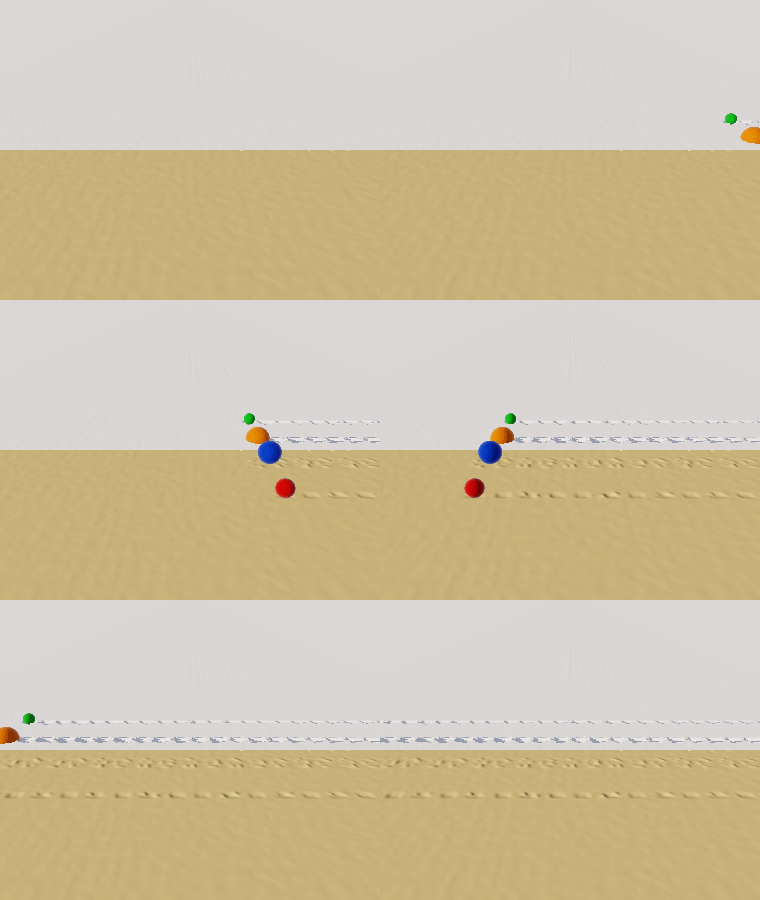
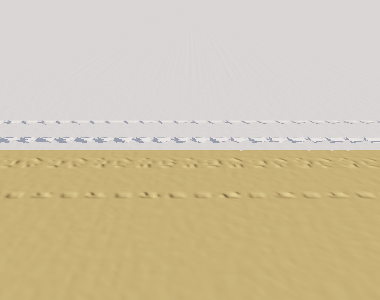
Four loads cross a strip of dry sand and a strip of fresh snow. Each one presses down with a real contact pressure - weight divided by footprint area - and the heightfield sinks by exactly that much. Nothing is a painted decal: every rut is the terrain yielding under Bekker pressure-sinkage, and the trail is just the record it keeps.
Two lanes, one variable each. The scene is built to isolate what drives sinkage. Lane A holds mass fixed at 80 kg and swaps foot area - a 0.02 m squared heel versus a 0.16 m squared snowshoe - so only pressure through area changes. Lane B holds area near 0.04 m squared and swaps mass - a 400 kg load versus a 50 kg one - so only pressure through weight changes. Same physics, four honest answers.
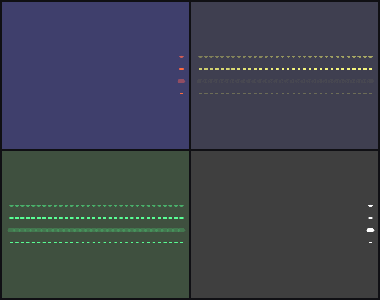
The numbers the sim reports. In fresh snow the 400 kg load ploughs a 219 mm rut; the 50 kg load leaves 61 mm. In dry sand the narrow heel bites 12 mm while the broad foot barely dents the surface and instead just packs it down (compaction climbs, depth stays shallow). A low, raking sun rakes the field so each shallow depression self-shadows and reads as a real dent, not a texture.
Where the physics comes from. Soil response is driven by OnlyCSharp 1.7's
Engineering.Geotechnical and EarthScience.SoilScience catalogs;
the only other reuse is the GIF byte-encoder, a seeded PCG32 RNG, and Perlin noise for the
ground texture. The renderer, the contact model, and the terrain solver are original. It
builds warnings-as-errors, 0/0, and the self-test passes green.