Reality Engine - Materials Lab
Look the material up. Never paint it.
Six cubes, one edge length, one gravity. Iron falls beside oak beside gold and
they hit the floor together - Galileo was right. What differs is what the physics reads out of a
catalog: density, mass, restitution, and the surface's metal-or-not response to light. Every
number here was resolved through MaterialDatabase.Resolve(...), not chosen to look
good.
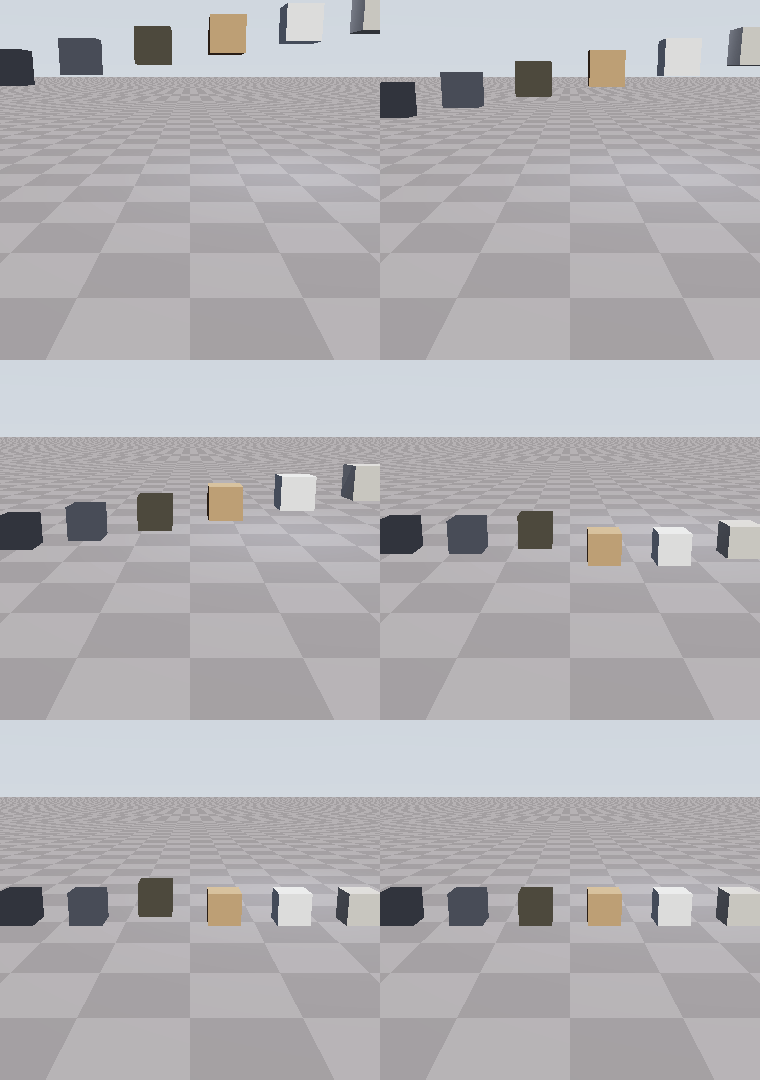
Iron, aluminum, gold, oak, ice, concrete. Bounce height tracks each material's restitution - gold's 0.40 lifts it highest, oak's 0.05 kills the rebound on contact. Metals get a full metallic response and a specular tint (gold's warm F0); the dielectrics stay matte.
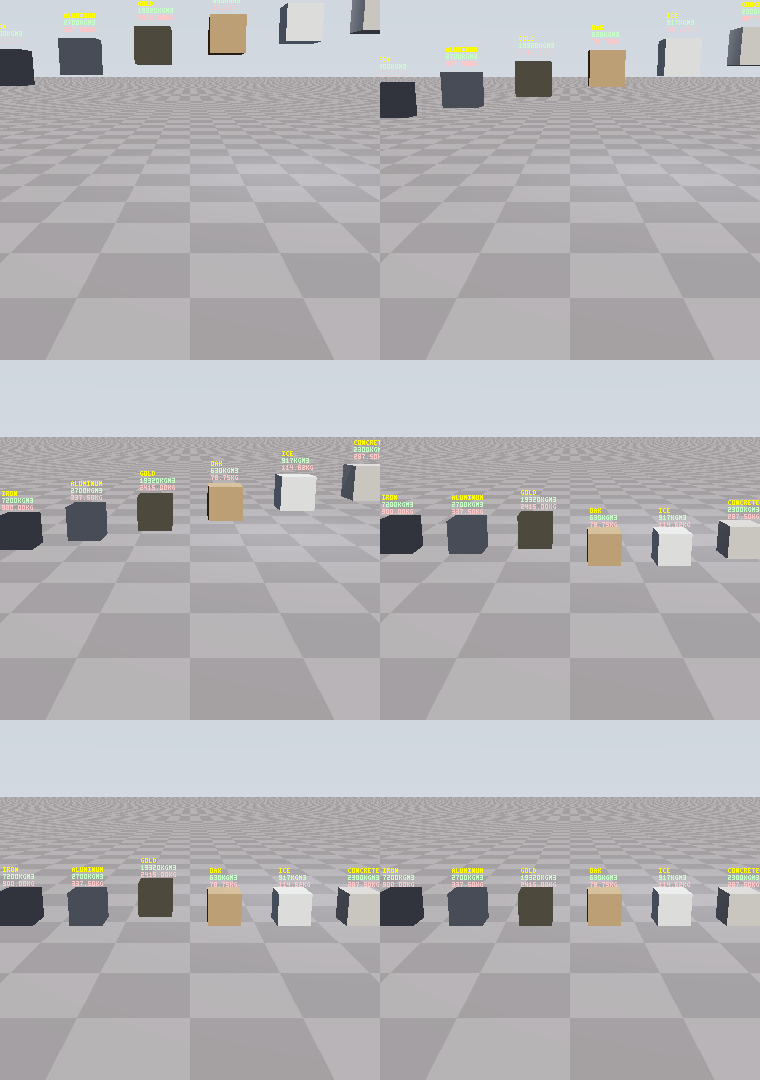
The same scene with a 3x5 bitmap-font overlay: name, density (kg/m³), and the mass that falls out of density x volume for the fixed 0.5 m cube. This overlay is the proof the masses are real - 900 kg of iron, 78.75 kg of oak.
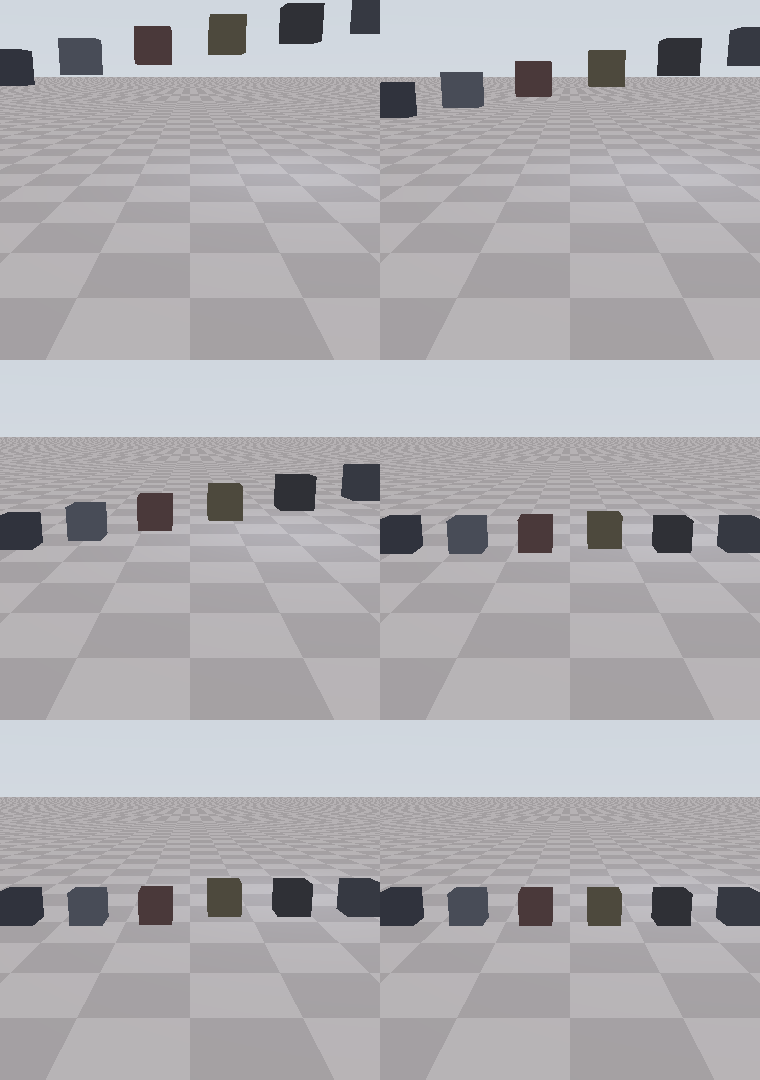
Steel, aluminum, copper, gold, titanium, lead - all metallic = 1, so all reflect with a tinted F0 instead of a white highlight. Copper's 980-nm-ish warmth and gold's yellow come straight from their albedo rows; lead's 11,340 kg/m³ makes it the heavy one at 1,417 kg.
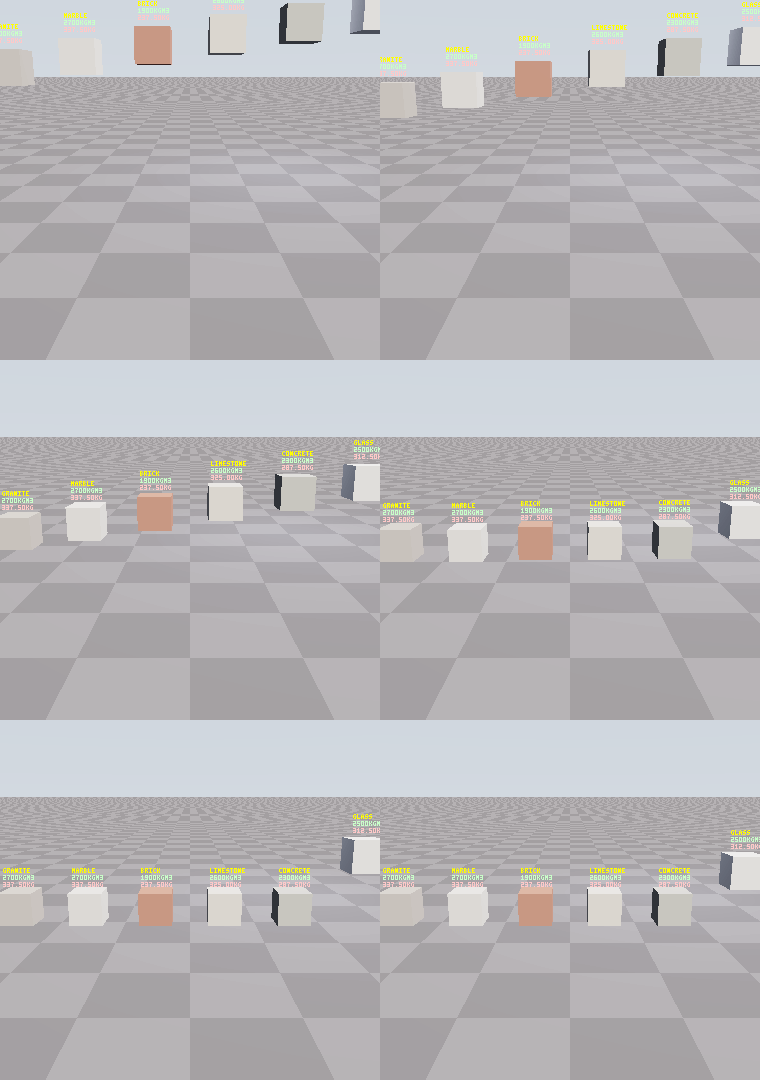
Granite, marble, brick, limestone, concrete, glass - dielectrics, so a flat 0.04 Fresnel and rough surfaces (glass excepted, at 0.02). Restitution drops to 0.25 for the masonry; glass keeps a lively 0.60. Densities are close enough that the masses cluster near 300 kg - stone is stone.